
NRRI's Ecosystem Resilience Initiative delivers science-based research and monitoring tools to help understand, protect, restore, and manage Minnesota’s vital water and wildlife ecosystems.
Understanding the ecosystems we live in and the benefits they offer is critical to characterizing, mitigating, remediating and avoiding harmful societal impacts. Science-based data is needed to make sound, natural resource decisions as we respond to climate change, consider aspects of environmental and social justice, define and maintain the social license to operate, and identify viable options as we develop the economy of the future.
Strategic Impact
Minnesota has a wealth of natural resources that support economic development and wildlife conservation. NRRI’s Ecosystem Resilience Initiative addresses the challenges of human-caused impacts and the ability of water resources to absorb the various disturbances and reorganize while maintaining critical functions for wildlife and environmental health.
Initiative Goal
Document ecosystem relationships and develop tools to monitor, remediate and manage water resources – from water source to the end of the pipe. This highly collaborative Initiative pulls from all of NRRI’s expertise platforms to address the complexity of Ecosystem Resilience and understand how to balance economic drivers with environmental stewardship.
Partners
- International Joint Commission
- State / Federal / Local governmental agencies
- NGOs: Canadian Wildlife Service, Environment and Climate Change Canada, Great Lakes Audubon, American Bird Conservancy, Smithsonian Migratory Bird Center, Shedd Aquarium, Daniel P. Hearther Center for Conservation Research, Alfred Wegener Institute Helmholtz Centre for Polar and Marine Research, Michigan State University, Cary Institute of Ecosystem Ecology, Universite de Montreal, UC Santa Barbara
- Industry Partners: Minnesota Power, Yawkey Mineral Management LLC, UPM/Blandin
- Minnesota Land Trust
- Tribal Partners: 1854 Treaty Authority, Leech Lake Band of Ojibwe
- National and Global University Partners
- University of Minnesota system
- Municipal Wastewater Treatment Plants
Ecosystem Resilience Programs

Research focused on monitoring and understanding the impacts of climate change on various ecosystems to mitigate risks and develop potential adaptation strategies.

Research to assess the health and function of natural ecosystems, human impacts, and remediation strategies.

Cross-cutting institute expertise that supports all NRRI programs and projects, from developing custom web applications for visualizing data to material testing, and spatial analysis.

A multi-disciplinary program that studies water quality, with a focus on developing solutions to manage water resource sustainably.

Understanding the ecosystem needs of terrestrial and aquatic wildlife to inform conservation, restoration and management efforts of natural resources.
Ecosystem Resilience Projects

Investigating bobcat and fisher habitat use, diets, and activity patterns to understand how changing forests and bobcat predation are impacting fisher populations.

A study of habitat and survival rates of species in decline to inform forest management practices in Minnesota.

This project will demonstrate the feasibility of the short-rotation woody plant-based phytoremediation to capture sulfate from lake water and manage water level by utilizing hybrid poplar.

Use a combination of wildlife, vegetation, and hydrology measurements to determine the impacts of logging on peatland forests.

A wildlife directory of Minnesota's carnivore species – from the tiny least weasel to the black bear.

The Minnesota Fisher Den Box Project is focused on evaluating an emerging habitat management tool to address the declining MN fisher population.
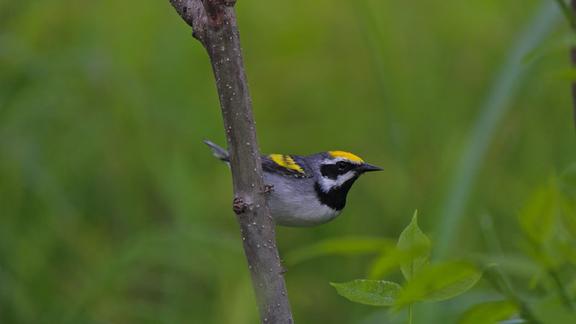
Documenting long-term population trends of breeding forest birds in Minnesota's Chippewa and Superior National Forests.

A free, web-based interactive mapping and spatial analysis tool for natural resource planning, management, and research in Minnesota.

This project assesses which habitats non-native mystery snails prefer to determine if they are a threat to wild rice.

Non-native, invasive crack willow trees have invaded miles of stream banks around Duluth.
Recent News

NRRI and the MN DNR begin long-term carnivore study in/around Duluth, MN.

Wildlife ecologist enjoys non-invasive research techniques, with the help of cameras and dogs, to get valuable data.

NRRI plants fast-growing trees to test their ability to clean up pollutants.
