Minnesota's Applied Research Institute for Natural Resources

The Natural Resources Research Institute (NRRI) is a U.S. based research institute established by the Minnesota state legislature within the University of Minnesota. NRRI is an applied research organization that works to develop and deliver the understanding and tools needed to utilize our mineral, forest, energy and water resources in a balanced and environmentally responsible manner.
Timeline and Overview
Founding and Infrastructure: 1983 – 1986
- 1983: Governor Rudy Perpich and Minnesota legislators establish the NRRI at the University of Minnesota Duluth with $2.4M in ongoing state funding.
- 1985: The Economic Geology Group forms to focus on Minnesota's non-ferrous mining potential.
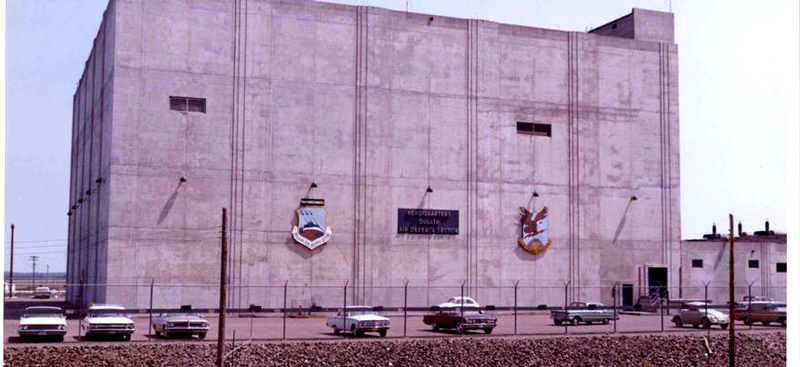
- 1986: An abandoned air defense building is donated and remodeled as NRRI's headquarters; U.S. Steel transfers lab management to NRRI.
Commercial Development & Environmental Labs: 1987 – 1995
- 1987–1988: Expands wood product research with Potlatch Corp and forms Innovation Grants, helping establish Minnesota Sphagnum, Inc.
- 1989: The Geographic Information Systems (GIS) Lab is established with NSF funding to study ecological impacts on stream habitats.
- 1993: Computational chemistry tools assist Upjohn in identifying AIDS-inhibiting compounds.
- 1994–1995: Begins short-rotation hybrid poplar research and develops climate change computer models predicting tree growth.
Water Quality & Mining Innovation: 1996 – 2005
- 1996–1997: Tests column flotation to improve taconite iron recovery and launches WaterOnTheWeb.org to provide real-time water quality data.
- 2001: Receives a $6M EPA grant to develop environmental indicators for Great Lakes coastal areas.
- 2002–2003: Builds pilot-scale furnaces for Direct Reduced Iron (DRI) nodule research and opens a rapid prototyping center for northern Minnesota businesses.
Advanced Materials & Conservation Studies: 2006 – 2013
- 2007: Establishes the Precambrian Research Center with UMD to train future economic geologists.
- 2008–2009: Directs key wildlife research on threatened species (Canada Lynx) and creates commercial uses for taconite waste rock (Laurentian Aggregate).
- 2010–2011: Geologically maps over 1 million feet of drill core from the Duluth Complex and restores drained peatland for wetland credits.
- 2013: Installs a pilot-scale kiln to thermally modify wood for high-value markets.
Regional Health, Energy & Modern Innovation: 2014 – 2022
- 2016–2017: Receives state funding for Mining & Water Innovation projects and successfully processes Minnesota ilmenite into high-purity titanium dioxide.
- 2018: Collaborates with Audubon Minnesota to publish an interactive online Breeding Bird Atlas.
- 2019: Demonstrates electrical generation using advanced wood fuels/biochar and completes eight technical reports for the Taconite Workers Health Study.
40th Anniversary, Commercialization & Green Steel Expansion: 2023 – 2024
- 2023: Celebrates the 40th anniversary of NRRI's creation; commercializes InnovaTree™ (a patent-pending fast-growing Poplar variety for bioeconomy/phytoremediation).
- Feb 2024: Launches a $4.5M Green Steel project, backed by a $2.9M U.S. Department of Energy (DOE) grant and $1.6M in NRRI internal funds, to develop engineered biocarbon replacing coal in steelmaking.
- Sep–Oct 2024: Contributes critical beneficiation research supporting MagIron's 2.6B metric tonne mineral resource estimate for DRI-grade ore; deploys over $3M in internal technology funding to drive research innovation.
Critical Minerals Initiatives: 2025 – 2026
- Jun–Sep 2025: Contributes to the USGS Earth MRI critical minerals mapping.
- Nov 2025: Launches the multi-year Duluth Carnivore Project with the MN DNR.
- Apr–Jul 2026: Launches the IMPACT Alliance with the National Laboratory of the Rockies; unveils a first-of-its-kind, pilot-scale Direct Reduced Iron (DRI) Simulator at the Coleraine facility.
- Sep 2026: Selected for a U.S. Department of Energy (DOE) award under a national $117M initiative to advance low-grade ore processing for next-generation steelmaking.
Resources
- How Innovation Saved the Iron Range - NRRI News
- NRRI Timeline - Four Decades of Research - NRRI News
- Boosting Minnesota's Economy - UMD News
- Natural Resources Research Institute - Wikipedia
NRRI Coleraine: Developing ideas and strengthening industries on Minnesota’s Iron Range

The history of NRRI’s Coleraine Laboratories is closely tied to the history of Minnesota’s Iron Range, transforming and adapting to the changing needs of the industries and economy. So let’s begin with a quick look at Minnesota’s mining history.
Late-1880’s - Minnesota’s lean red ore deposits attracted miners to provide steel for our growing nation. In the 1950s and through the 70s, domestic lean iron ores continued to feed the hungry steel mills. By the early-80s, however, domestic steel production was declining while worldwide steelmaking and iron ore resources soared, shocking North America’s stronghold in this market.
1983 - The Natural Resources Research Institute (NRRI) was signed into legislation at the University of Minnesota Duluth to provide research for sustainable economic development to Minnesota’s natural resource-based industries, including the Iron Range.
1986 - NRRI began a long-term relationship with United States Steel Corporation to manage its Coleraine, Minnesota, research laboratory. The laboratory was transferred to University ownership in 1989. The minerals lab developed a three-pronged strategy for improving taconite ore products from the Iron Range: flowsheet and efficiency improvement, new uses for by-product rock, and the development of value-added iron nodules from the iron ore concentrate. Serving all Minnesota taconite plants, the research projects regularly reach the stage of commercial implementation after testing and demonstration in the lab's large pilot plants.
2016 - An old train repair building was remodeled and modernized into a Biomass Conversion Lab with a goal to enhance the understanding of a variety of bio-based, commercial-scale processes, characterizing their efficiency, industry application and environmental impact. It houses an indirect-heated rotary kiln and moving bed reactor to convert woody biomass and agricultural byproducts into renewable, regional fuel products. More advanced materials are converted into solid fuels, biochars and other advanced carbon products.
Today – NRRI’s Coleraine labs provide more efficient processes, new technologies, new ore products and non-ferrous mining possibilities—strengthening Minnesota’s mining industry for a promising future.
The Duluth SAGE Building
NRRI Duluth Labs Building
Building History and Facts
Original Purpose: Built as a bomb-proof, gray concrete blockhouse command center to track and intercept potential enemy aircraft.
SAGE System: It housed massive AN/FSQ-7 computer systems designed for continental air defense.
Conversion: The military site closed and was later repurposed by the University of Minnesota Duluth.
Current Use: It serves as the main research facility for NRRI-Duluth, featuring thick 16-inch solid concrete walls spanning roughly 112,000 square feet.
Overview
The building that houses NRRI today was built as an air defense command center during the Cold War. Located next to Duluth’s International Airport, NRRI's Duluth facility used to contain one of the Air Force’s primary systems for detecting intruding aircraft during the 1950s-1960s.
The Semi-Automatic Ground Environment (SAGE) was a system of large computers and associated networking equipment that coordinated data from many radar sites and processed it to produce a single unified image of the airspace over a wide area. SAGE directed and controlled the NORAD response to a Soviet air attack, operating in this role from the late 1950s into the 1980s. Its enormous computers and huge displays remain a part of cold war lore, and a common prop in movies such as Dr. Strangelove and Colossus.
Powering SAGE were the largest computers ever built, IBM's AN/FSQ-7. Each SAGE Direction Center contained two FSQ-7's for redundancy, filling two floors of a large cube-shaped concrete building. Information was fed to the Direction Center from a network of radar stations as well as readiness information from various defence sites. The computers, based on the raw radar data, developed "tracks" for the reported targets, and automatically calculated which defences were within range. Subsets of the data were then sent to the many operator consoles, where the operators used light guns to select targets onscreen for further information, select one of the available defences, and issue commands to attack. These commands would then be automatically sent to the defence site via teleprinter. Later additions to the system allowed SAGE's tracking data to be sent directly to CIM-10 Bomarc missiles and some of the US Air Force's interceptor aircraft in-flight, directly updating their autopilots to maintain an intercept course without operator intervention. Each SAGE Direction Center also forwarded data to a Combat Center for "supervision of the several sectors within the division" ("each combat center [had] the capability to coordinate defense for the whole nation"). Connecting the various sites was an enormous network of telephones, modems and teleprinters.
SAGE became operational in the late 1950s and early 1960s at a combined cost of billions of dollars. It was noted that the deployment cost more than the Manhattan Project, which it was, in a way, defending against. Throughout its development there were continual questions about its real ability to deal with large attacks, and several tests by Strategic Air Command bombers suggested the system was "leaky". Nevertheless, SAGE was the backbone of NORADs air defence system into the 1980s, by which time the tube-based FSQ-7's were increasingly costly to maintain and completely outdated. Today the same command and control task is carried out by microcomputers, based on the same basic underlying data.